
Tuesday, March 24, 2026
  • Login
CEO North America
  • Home
  • News
    • Business
    • Entrepreneur
    • Industry
    • Innovation
    • Management & Leadership
  • CEO Interviews
  • Opinion
  • Technology
  • Environment
  • CEO Life
    • Art & Culture
    • Food
    • Health
    • Travel
No Result
View All Result
  • Home
  • News
    • Business
    • Entrepreneur
    • Industry
    • Innovation
    • Management & Leadership
  • CEO Interviews
  • Opinion
  • Technology
  • Environment
  • CEO Life
    • Art & Culture
    • Food
    • Health
    • Travel
No Result
View All Result
CEO North America
No Result
View All Result

CEO NA Magazine > CEO Life > Health > The true effect of unnecessary emails

The true effect of unnecessary emails

in Health, Opinion
- The true effect of unnecessary emails
Share on LinkedinShare on WhatsApp

Un correo electrónico menos innecesario al día podría reducir las emisiones de carbono en 16.433 toneladas, lo que equivale a la asombrosa cantidad de 81.152 vuelos desde Londres Heathrow a Madrid.

Los correos electrónicos se han convertido en una necesidad cuando se utiliza Internet para transacciones y redes sociales.

Pasó el tiempo y se estableció como una de las herramientas más importantes de Internet, estableciendo una base sólida de más de 3.800 millones  de usuarios de correo electrónico en todo el mundo , y se prevé que alcance los 4.300 millones en 2022.

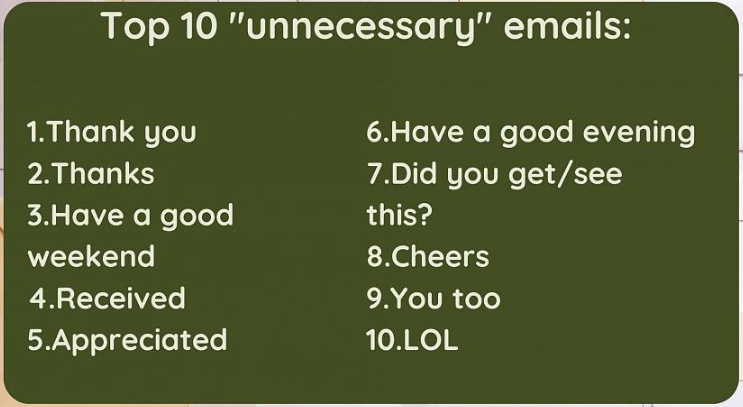
But in this large amount of emails, how many of them are practically useless? According to EuroNews, over 64 million unnecessary emails are sent by Brits each day, while globally, a staggering 269 billion emails are sent each day and there are currently just over 3.7 billion email users worldwide. The sending of one email is estimated to produce 0.000001 tonnes of CO2 equivalent, it doesn’t seem like much, but if you consider that the average person sends five to ten ‘unnecessary’ emails per week, you very quickly3 have a far larger carbon footprint when looked at on a national scale.

According to Mike Berners-Lee’s book, The Carbon Footprint of Everything, a normal email has a footprint equivalent to 0.3 g of CO2 emissions. This can rise to 50g, however, with the addition of a large attachment. This figure looks at everything from the power in data centres to the computers that send, filter and read the messages.

“Whilst the carbon footprint of an email isn’t huge, it’s a great illustration of the broader principle that cutting out the waste in our lives is good for our wellbeing and good for the environment” (…) “When you are typing, your computer is using electricity, when you press send it goes through the network, and it takes electricity to run the network. And it’s going to end up being stored on the cloud somewhere, and those data centres use a lot of electricity. We don’t think about it because we can’t see the smoke coming out of our computers, but the carbon footprint of IT is huge and growing,” says Mike Berners-Lee, a professor at the Environment Centre in Lancaster University.

According to Martin Armstrong from Statista, adjusting the calculation to people who are employed, you have a pool of 33 million people in the UK. Being even stricter, removing jobs from sectors which largely don’t involve the regular sending of emails leaves you with 19 million people. Let’s add half of the country’s 5 million self-employed to give us a total of 24 million regular emailers. Under this set of ‘lower estimate’ assumptions, the figure still comes to 8,760 tonnes of carbon – equivalent to 43,260 flights to Madrid.
- The true effect of unnecessary emails
via euronews.com

Pollution kills

Finding a global action plan against climate change is as necessary as it is difficult, why? Because people are dying.

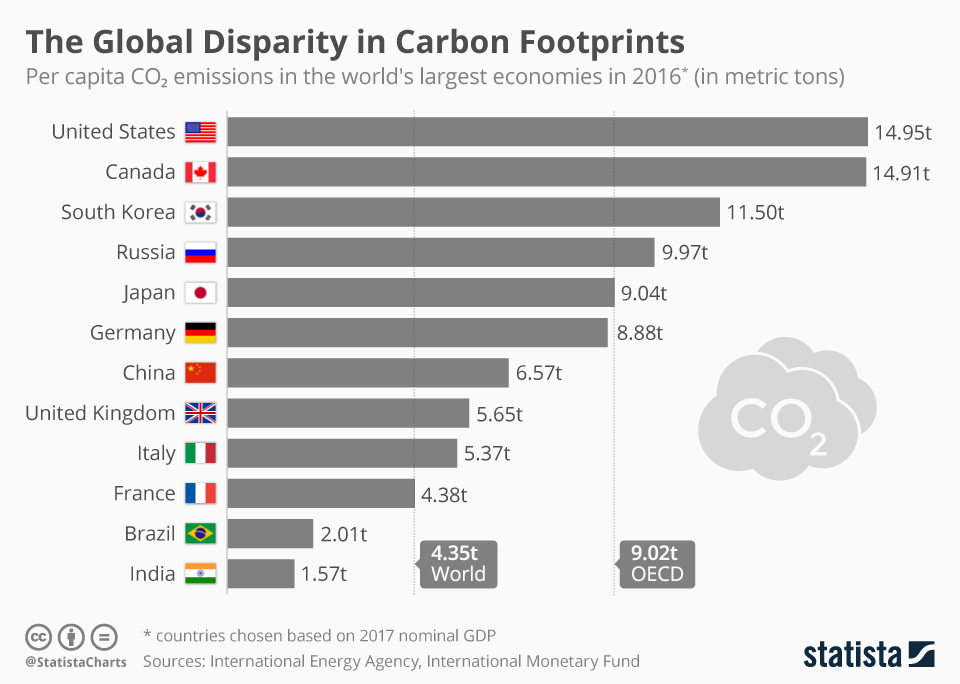
La Alianza Global para la Salud y la Contaminación advierte que la contaminación mata tres veces más personas al año que el VIH / SIDA, la tuberculosis y la malaria combinados. También mata 15 veces más personas cada año que la guerra y otras formas de violencia. Al menos el 90 por ciento de todas las muertes prematuras por contaminación ocurren en países de ingresos bajos y medianos. Estados Unidos ocupa el séptimo lugar en cuanto a muertes totales y es la nación ‘más rica’ en figurar en el top 10 con 197.000 vidas perdidas en 2017, también se ubica como el país con las emisiones de CO₂ per cápita más altas del mundo.

- The true effect of unnecessary emails

Tags: Carbon emissionsCEOCEO NorthamCO2HealthPollutionUnnecessary emails

Related Posts

Accountability Is Leadership’s Greatest Weakness
Opinion

Accountability Is Leadership’s Greatest Weakness

Iran conflict: Keeping perspective on market risk
Opinion

Iran conflict: Keeping perspective on market risk

New Resistance Training Guidelines Say Consistency Is Key for Stronger Results
Health

New Resistance Training Guidelines Say Consistency Is Key for Stronger Results

How Conflict in the Middle East Is Impacting Supply Chains
Opinion

How Conflict in the Middle East Is Impacting Supply Chains

The CIO’s role in the age of AI: Beyond technology stewardship
Opinion

The CIO’s role in the age of AI: Beyond technology stewardship

Why corporations partnering with academics is good business
Opinion

Why corporations partnering with academics is good business

The Slow Drip of Price Increases
Opinion

The Slow Drip of Price Increases

What is creatine, what does it do and should you be taking it?
Health

What is creatine, what does it do and should you be taking it?

Why Active ETFs Are Gaining Momentum as Investors Seek New Solutions
Opinion

Why Active ETFs Are Gaining Momentum as Investors Seek New Solutions

Iran Conflict: Seven Takeaways for Investors
Opinion

Iran Conflict: Seven Takeaways for Investors

No Result
View All Result

Recent Posts

  • Gregory Hall, Head of U.S. Global Wealth Management, sits down with CEO NA to discuss the key factors behind PIMCO’s long-standing dominance and its expanding global wealth business
  • Accountability Is Leadership’s Greatest Weakness
  • Britain responds to Iran war energy shock by requiring solar panels and heat pumps in all new homes
  • Bank of Montreal launches tokenized cash platform with CME and Google
  • Gap launches AI-Powered fit and conversational checkout on Google Gemini

Archives

Categories

  • Art & Culture
  • Business
  • CEO Interviews
  • CEO Life
  • Editor´s Choice
  • Entrepreneur
  • Environment
  • Food
  • Health
  • Highlights
  • Industry
  • Innovation
  • Issues
  • Management & Leadership
  • News
  • Opinion
  • PrimeZone
  • Printed Version
  • Technology
  • Travel
  • Uncategorized

Meta

  • Log in
  • Entries feed
  • Comments feed
  • WordPress.org

  • CONTACT
  • GENERAL ENQUIRIES
  • ADVERTISING
  • MEDIA KIT
  • DIRECTORY
  • TERMS AND CONDITIONS

Advertising –
advertising@ceo-na.com

110 Wall St.,
3rd Floor
New York, NY.
10005
USA
+1 212 432 5800

Avenida Chapultepec 480,
Floor 11
Mexico City
06700
MEXICO

  • News
  • CEO Interviews
  • Opinion
  • Technology
  • Environment
  • CEO Life

  • CONTACT
  • GENERAL ENQUIRIES
  • ADVERTISING
  • MEDIA KIT
  • DIRECTORY
  • TERMS AND CONDITIONS

Advertising –
advertising@ceo-na.com

110 Wall St.,
3rd Floor
New York, NY.
10005
USA
+1 212 432 5800

Avenida Chapultepec 480,
Floor 11
Mexico City
06700
MEXICO

CEO North America © 2024 - Sitemap

Welcome Back!

Login to your account below

Forgotten Password?

Retrieve your password

Please enter your username or email address to reset your password.

Log In
No Result
View All Result
  • Home
  • News
    • Business
    • Entrepreneur
    • Industry
    • Innovation
    • Management & Leadership
  • CEO Interviews
  • Opinion
  • Technology
  • Environment
  • CEO Life
    • Art & Culture
    • Food
    • Health
    • Travel

© 2026 JNews - Premium WordPress news & magazine theme by Jegtheme.